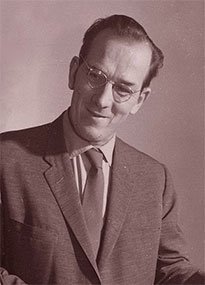
The Short films of Gyula Macskássy
Nota: Los cortos tienen pocos diálogos en húngaro (subtitulados en inglés), pero se pueden disfrutar plenamente sin entender los diálogos.
Gyula Macskássy was a cartoon director and graphic artist. In 1951 he founded the Hungarian animation studio Pannónia Film. His films were influenced by the work of Walt Disney, but he soon developed a typical Hungarian, unique style. Caricature, abstract painting and folk art also had an impact on his works.
The Small Rooster's Diamond Half-Kreuzer / A kiskakas gyémánt félkrajcárja (1951)
The story is based on a Hungarian folk tale. A very poor woman hasn't got nothing but a small rooster because the king's (or in another version of the story: the Turkish emperor's) taxes are very high. One day the rooster finds a diamond Half-Kreuzer (Hungarian money from the old times) at the garbage heap, but the king takes it from him too. The rooster goes to the castle and demands the coin back. The king tries to destroy him in various ways but the rooster can always escape from the danger.
Two Blackpepper Oxen / Két bors ökröcske (1955)
Another classic folk tale. Young Gergő is living in a small house in village, in the middle of a pine forest with his widow mother. He cuts wood for a living but he is very poor. One day he meets a strange old man in the forest. Gergő offers his bread to him and the man gives the boy two small oxen. Gergő soon realizes that - as a Hungarian proverb says: "The (black)pepper is small but strong". But the evil castellan of the land has got dirty plans to take the two magical animals away from the boy.
Sport Competition in the Forest / Erdei sportverseny (1952)
In this early Macskássy short all the animals of the forest - except for the lazy pig - are preparing and practicing for a sport event. But what happens when the fox and the wolf interferes?
The Pencil and the Eraser / A ceruza és radír (1960)
In this short we follow a pencil and a rubber in their cooperative efforts to make drawings that comes to life. What happens if they fail to cooperate?
Duel / Párbaj (1961)
A scientist creates a big atom that improves on everything it touch. But what will happen if destructive forces gets hold of the special invention?
No IMDb available: 1, 2, 3... History of Numbers / 1, 2, 3... A számok története (1962)
In this Macskássy Gyula we are told the history of numbers, the language that all of the world know. It starts with some fantasy about the birth of mathematics, however it turns out to be a brief but fairly accurate outline on the story of maths, including stories about al-Khwārizmī, Pythagoras, Archimedes and more.
A Romantic Story / Romantikus történet (1964)
A man meets a girl, sitting on a bench in the park. He imagines ways that he can impress her. But will he make the good impression when he gets the chance?
A Puppy's Strict Obligation / Kutyakötelesség (1953)
We meet a nervous little puppy on a farm. He's afraid of most of the other animals on the farm, and the cat has even taken control of the dog's house. How will he manage to protect the animals when the fox comes to visit?
The Clever Girl / Okos lány (1955)
The clever girl answers questions between 3pm and 4pm. Because of her smartness and her beauty, the prince decides that he will marry her if he can answer his three quiestions. The story suprises with its surreal elements, like an apple tree that accept coins for fruits, and it's non-linear storytelling at the end.
Mouse and Lion /
Egér és oroszlán (1957)
This short is inspired by the famous story by Aesop about the mouse and the elephant. The elephant saves the mouse's life, but gets a laugh when the mouse states that he will repay the favor. In the end this short concludes fantastically with a toothbrush advice.
The Greedy Bee / A telhetetlen méhecske (1958)
It is springtime, and the bees are starting to collect nectart for honey, the one thing the greedy bee never can get enough of. While the other young bees are being trained, all the greedy bee can think of is honey. But will he be aware of the evil wasp when he doesn't follow the lectures?
Owly, Who Watched TV All Day / Uhuka, aki egész nap a tévét nézte (1969)
Owly was born when his father watched TV. He gets interested in television himself. But can he learn anything, while all he wants is to watch TV?
We Would Never Do That / Ez nálunk lehetelen (1966)
A man is going to build a house, but how will he manage to stay focused when neither the plan drawings or the material lives up to his fantasies. Will the bureaucrats approve?
100 Grams Immortality / Tíz deka halhatatlanság (1967)
This is the short story of a bewinged horse. Throughout his youth he gets bullied by the other horses, and likewise by the birds. What would he do with his wings? Why can't he sing like a bird? Can some place exist, where he would be appriciated as the hose-bird he is? Or can he, despite his misery, help somebody else?
Little Man - BIG CITY / Kis ember, nagy város (1967)
The title says it all. This short is about the little man in the big city. And it does really well in expressing this feeling of being a little guy in a big crowd, feeling alienated by all the other people doing exact the same things as you, in solitude. In addition to this it brings up the problem with different types of pollution. Which may sound reasonable since the short was made for The World Health Organisation. However the look on life in the city isn't all that grey. The film turns and provides a lot of creative suggestions for a better living.
Old Man and Young Man / Öreg és fiatal (1969)
An old and a young man is quarreling over the music they are playing. But what will happen when the rock idol is picking up on the old music?
Az öngyilkos (1970) / A jóember (1970) / A segitség (1970)
A fegyver (1971)
A szobor (1971)
Az öreg (1971)
Siker (1970)
Kíváncsiság (1970)
A rács (1970)